
What a Valve Really Does
At its most basic level, a valve regulates fluid movement. In bioprocessing, that regulation extends far beyond simple open and close functions. Valves influence how flow starts, stops, and transitions, how pressure builds and releases, and how a system responds to changes in operating conditions.
Because valves sit at critical control points in a process, their behavior directly affects timing, stability, and repeatability. Small differences in how a valve opens, closes, or holds position can introduce variability that compounds downstream — particularly in automated or continuous workflows.
In this sense, a valve is not just a mechanical component in a flow path. It is a behavioral element that shapes how a bioprocess actually performs under real-world conditions.
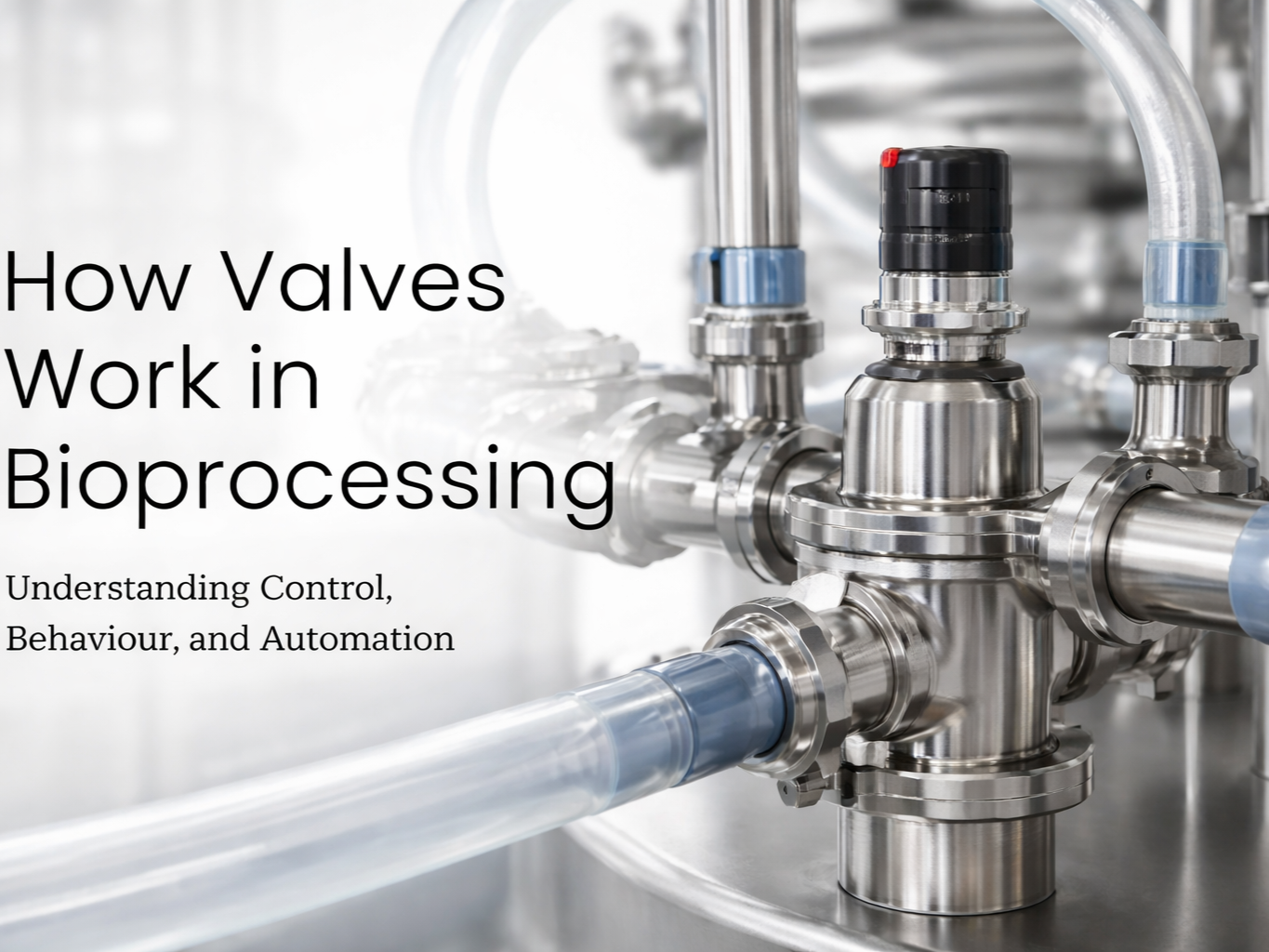
Valves shape how bioprocessing systems behave, influencing flow, pressure, and control — not just open and close states.
